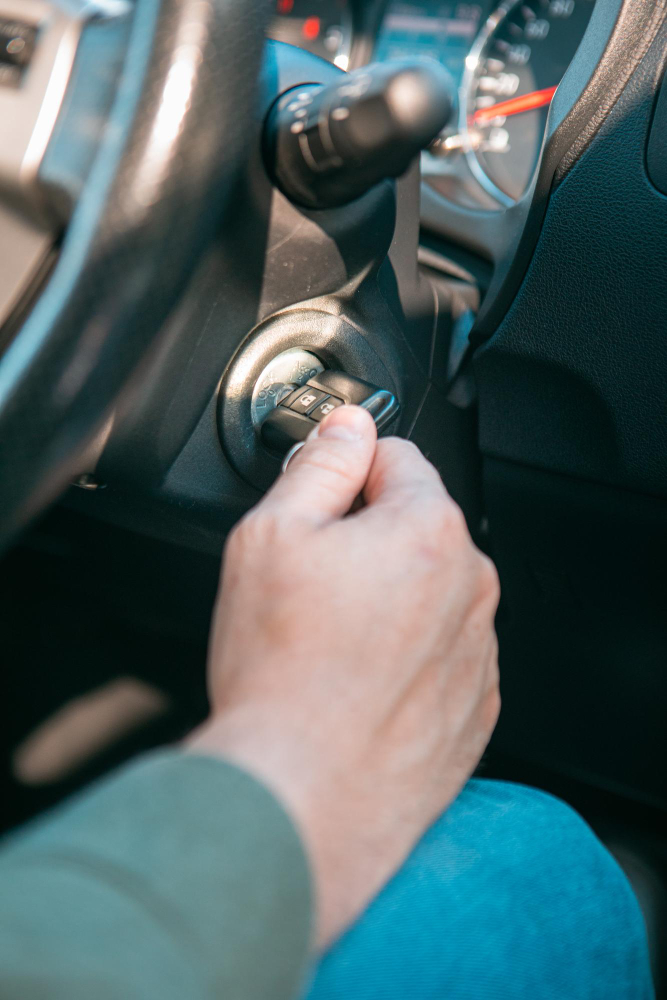
Why Isn't My Key Turn in the Ignition?
It is typically caused by three factors:
- The steering wheel lock has engaged and is binding the cylinder
- The key itself has worn down
- The ignition cylinder is failing inside
From the driver’s seat, they feel almost identical. That’s why so many people go straight to the worst conclusion. Here’s how to tell them apart.
The Three Causes and How to Tell Which One You Have
1. The steering wheel lock is engaged
If you turned the wheel even a little when you shut the car off, the lock pin drops in and binds against the ignition. The key's not going to turn at all.
How it feels: the key is completely solid. No movement whatsoever, and the steering wheel has a small amount of play in one direction and none in the other.
The fix: hold light pressure on the key in the turn direction, then rock the steering wheel firmly left and right. The pin releases and the key turns. This is the cause most of the time, and it costs nothing.
2. The key has been worn
Keys wear down. After years of use, the cuts round off, and the worn key no longer aligns with the wafers inside the cylinder well enough to turn.
How it feels: Instead of failing all at once, it gradually became more difficult over weeks or months. Jiggling helps. A spare key works fine.
The solution: a new key cut to the vehicle's original factory pattern rather than a copy of the worn one. That matters because a duplicate of a worn key is simply a new worn key.
3. The ignition cylinder is failing
The springs and wafers inside the cylinder wear out or get grit in them and jam up.
How it feels: the spare key fails the same way the original does. The key may go in only partway, feel gritty, stick between positions, or turn but not spring back. Sometimes it turns and the car does nothing.
The fix: the cylinder is repaired or replaced. This is the expensive one, and it is also the one that gets worse the more you force it.
What to Try Before You Call
In this order. The first two address the vast majority of these issues.
- Rock the steering wheel while applying gentle turning pressure to the key.
- Check the gear selector. Automatics will not release the key or start unless they are fully in park. Nudge the shifter firmly into park, then try again.
- Try your spare key. If the spare turns, your original is worn, and the ignition is fine. That single test separates a key problem from an ignition problem.
- Look at the key itself. Hold it next to the spare. If the cuts look shallower and the edges rounded, you have your answer.
- Check the dash lights. If nothing lights up at all, you may be looking at a dead battery rather than an ignition fault.
What Not to Do
This section might save people more money than any other part of this page.
Do not force it. Pliers, a cheater bar, or leaning your weight into the key will snap it off inside the cylinder. A stuck key is a repair. A snapped key inside a stuck cylinder is a bigger one.
Never spray general purpose lubricant into the ignition. The common workshop spray is solvent. They wash away the graphite that ought to be there and leave a residue which collects grit, so the cylinder works for a few days and then jams worse than it did before. Dry lubricants are what should be in a cylinder.
Do not keep trying the same thing harder. If gentle pressure and rocking the wheel has not worked after a few attempts, something mechanical is wrong and repetition only wears it further.
Why Ignitions Fail Faster Around Venice
There are two things here that shorten the life of an ignition cylinder in Venice and surrounding areas.
Sand. Fine grit travels along the key itself. After a day at the beach, it rides into the cylinder on the blade, and once between the wafers, it grinds whenever the key turns. It is the most common reason a healthy cylinder begins to feel rough.
Cars that sit. A vehicle parked for a season returns to a cylinder that hasn't moved in months, and the first few turns are stiff. Forcing it is the worst way to discover the problem.
One more cause of ignition failures, which is not local, is a heavy keyring. Every pound hanging off the key pulls sideways on the cylinder while you drive. Over years, this wear can pull the cylinder out of alignment. If your keys are a fistful of fobs and store cards, take the car key off and carry it separately.
What Ignition Repair Costs in Venice, FL
The price depends on which of the three causes you have, so it's worth knowing before you book.
- Steering lock binding: nothing. It is not a fault.
- A worn key: a replacement key cut to the factory pattern runs $120 to $180 for a transponder key, or $95 to $125 where a plain duplicate will do.
- Ignition repair or replacement: $250 to $450, depending on the vehicle and whether the cylinder can be rebuilt or has to be replaced.
When you call, explain what the key does and does not do, and we will usually tell you which of the three you are looking at before dispatching anyone. We work on the car right where it is, so there is no need for towing.